First things first: We're looking for people with a strong intellect and so if you're applying to one of our schemes you'll need an academic track record to demonstrate this. You'll be on track for at least a 2:1 in every module, in any discipline.
Apply online
At Linklaters, we offer a wide range of programmes and opportunities for every stage of your legal journey. Whether you are a student, graduate or career changer, you can find out all you need to know about our application process and key attributes we are looking for, as well as a full list of our current vacancies. For more information about our opportunities, please click here.
You can also sign up to our Talent Community to receive exclusive content, updates and reminders to help you navigate the Linklaters application process. Please click here to join.
Current penultimate-year and final-year undergraduates, postgraduate students and graduates from Black and other underrepresented minority ethnic backgrounds, or those who have been granted refugee status or are from a recognised conflict zone. Please see the webpage for full details
Current first-year of a three-year undergraduate degree or second-year of a four-year programme at a UK or Irish university. Please see the webpage for full details
Current penultimate-year and final-year Law students, or Law graduates who have studied or are nationals from any African country, except for South African nationals
Current penultimate-year Law students at Indian universities
09/03/2026 - 18/06/2026
November - December 2026 (three weeks)
Closed
Campus Brand Ambassador 2026/27
Current first-year undergraduates or second-year of a four-year degree. Please see the webpage for full details
March - June 2026
September 2026 - February 2027
Closed
How to apply
We understand that applying may feel daunting and time-consuming but we'll do everything we can to make it an enjoyable experience. Selection is mutual. It allows us to find out more about you. But it's also an opportunity for you to decide whether we’re right for you. So, ask questions, allow time to think and do your research.
Remember too, that you don't need to decide where to apply right away. Talk to us, find out more about what we do and what we can do for you. On our events page, you'll find a calendar of our upcoming law fairs, presentations and workshops. Ask us anything, and we promise to give you a straight answer. You might also find it useful to complete our free virtual internship to gain an insight into our work: www.theforage.com/linklaters.
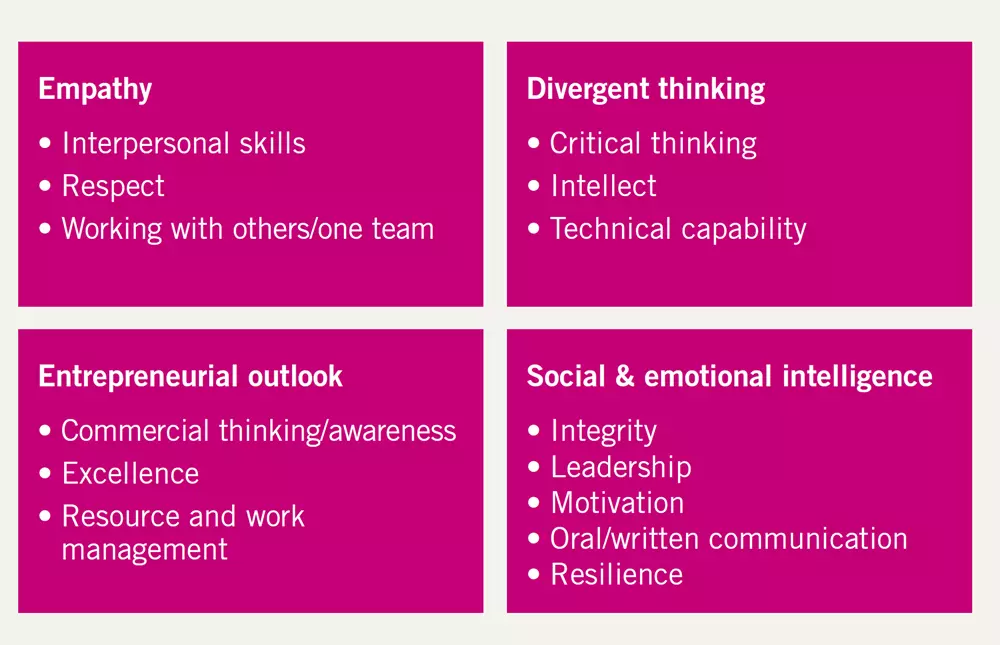
So, what are we looking for? Mindset matters. We exist to help our clients’ businesses succeed, no matter what. In a climate of great change – commercial, political and economic – that means evolving and adapting at pace to stay ahead. So, we’re looking for candidates with an agile mindset, and the ability to match. Motivated and resilient but also capable and collaborative. Consider that when completing the online assessment, taking a test or meeting us face to face.
Here is our agile mindset framework:
Watson Glaser practice questions
If you have any questions during the process, or want to speak to us about your personal circumstances, please contact the team.
Passage
Health care professionals who collaborate with each other provide better care to their patients.
Question
Health care professionals who work in isolation do not have the best interest of patients in mind. (Yes/No)
Answer
No - Although this is a possibility, there is nothing in the statement to conclude about health care professionals who do not collaborate with each other. Thus, this assumption is not made in the statement and the answer is 'No'.
Question
A health care professional may not possess all the required expertise to treat some patients. (Yes/No)
Answer
Yes - It is necessarily assumed that a health care professional may not possess all the required expertise to treat some patients. Thus, this assumption is made in the statement and the answer is 'Yes'.
Question
Health care professionals who collaborate with each other have the primary goal of improving their patient’s health. (Yes/No)
Answer
No - There is nothing in the statement to conclude that health care professional do not collaborate for other reasons, such as for research studies. Thus, this assumption is not made in the statement and the answer is 'No'.
Deduction
Passage
A proportion of the induction presentations at Company X include health and safety guidelines. Employees that attended a presentation containing health and safety guidelines had fewer accidents at work than the average employee in the company.
Question
All those that attend an induction had fewer accidents than the average employee at the company. (Yes/No)
Answer
No - The answer is 'No', as the passage states that only a proportion of the induction presentations included health and safety guidelines, leaving the rest of the induction presentations without this content.
Question
Only a proportion of the employees who attended an induction had fewer accidents than the average employee at the company. (Yes/No)
Answer
Yes - The answer is 'Yes' as only a proportion of induction presentations included health and safety guidelines, and therefore those that did not receive this content would not have had its accident reducing benefits.
Question
Induction processes are beneficial to an organisation. (Yes/No)
Answer
No - The answer is 'No', as, in this context, induction presentations are only beneficial if they incorporate aspects of health and safety.
Interpretation
Passage
In Country X, nine hours after drinking a standard (75cl) bottle of red wine (in the space of one hour), 90% of adults tested in a large scientific study still had blood alcohol levels exceeding the legal level that allows them to drive in that country.
Question
More than 90% of those who drink a standard bottle of wine (in the space of an hour) and then drive two hours later are over the legal alcohol limit to drive. (Yes/No)
Answer
Yes - The answer is 'Yes', as it is safe to assume beyond reasonable doubt that if 90% are unable to drive within the legal blood alcohol levels after 9 hours then 90% or above will also be legally unable to drive after two hours.
Question
No adult who has drunk 75cl of red wine in the space of an hour has blood alcohol levels allowing them to drive six hours later. (Yes/No)
Answer
No - The correct answer is 'No', as there is no evidence to say that all people who have drunk a bottle of wine will have blood alcohol levels exceeding the limit after six hours.
Question
People who have blood alcohol levels above the legal range are worse drivers than others. (Yes/No)
Answer
No -The correct answer is 'No', although this is likely to be the case, there is no information presented in the passage to support this.
Evaluation of Arguments
Passage
A country facing a problem of population growth caused largely by people living longer, should seek to significantly reduce levels of immigration in aiming for a solution.
Question
No; this could reduce the size of the active workforce necessary to economically support the ageing population. (Strong/Weak)
Answer
Strong - This is a 'Strong' argument put forward to challenge the proposal, identifying a key flaw in reducing the number of immigrants and subsequent effect on the economy.
Question
Yes; it is a quick and visible action towards a solution. (Strong/Weak)
Answer
Weak - A quick and visible solution does not necessarily make it a strong one. Therefore, this is a 'Weak' argument.
Question
No; immigrants are too easily targeted to take the blame for a country’s population problems. (Strong/Weak)
Answer
Weak - The argument lacks relation to the statement and does not put forward a strong case as to why immigration levels should be reduced, therefore it is a 'Weak' argument.