Publication
The UK’s £298bn Defence Investment Plan
Navigating the legal and commercial landscape in a new era of UK defence spending
Publication
Navigating the legal and commercial landscape in a new era of UK defence spending

The UK’s long-awaited Defence Investment Plan (“DIP”) has been announced by Prime Minister Sir Keir Starmer. According to the announcement, the Government will invest £298bn in defence across the next four years, including £15bn of new spending in addition to the funding announced in the 2025 Spending Review. Overall, defence funding will increase to almost £80bn a year by 2029 – the Government says that UK defence spending will therefore increase to 2.7% of GDP. The DIP explains how the plans set out in last year’s Strategic Defence Review will be funded. Whilst the majority of the funding is expected to come directly from Government, a £50bn defence export facility established by UK Export Finance was also announced to support British defence firms to win contracts globally.
Unsurprisingly, the UK’s nuclear deterrent is the single biggest area of spend. This reflects both the cost and complexity of delivering nuclear programmes and the central importance of the allied nuclear programme to the trilateral AUKUS partnership between Australia, the UK and the US. For UK contractors and investors, the announcement of £26bn over the next decade to deliver significant upgrades at key UK naval bases will be of particular interest. It is unclear how these works will be delivered, although some investors will doubtless be keen to see a return to PFI-style projects.
Arguably the most notable feature of the DIP is the focus on defence technology, with funds set aside for drone transformation (including £65m for “inexpensive expendable autonomous systems”, such as uncrewed ground vehicles), defence from drones and other forms of attack by air, and a range of digital programmes, including AI initiatives. Similarly, there is a strong focus on using the new funding to transform the Navy into a “Hybrid Navy”, using a combination of traditionally manned Naval vessels and autonomous vessels and aircraft. This is indicative of the rapidly changing face of warfare, which has become more high-tech and is evolving through innovation cycles measured in weeks rather than months or years. Warfare is moving swiftly towards the use of unmanned vehicles and equipment, with inexpensive systems now being capable of destroying high value targets and causing significant disruption. In turn, anti-drone defence systems must also evolve rapidly – it is therefore unsurprising that technology is a central feature of the DIP.
Alongside the announcement, the Ministry of Defence has also announced that the £5bn will be used to fund the Uncrewed Systems Centre (Europe’s largest drone testing facility), which opened earlier this month in Swindon. It will also fund a new Uncrewed Systems Taskforce to “rapidly develop and field new autonomous capabilities with industry”. These developments underline the importance of investment in rapidly evolving technology, which will have benefits for the defence and aerospace industries alike.
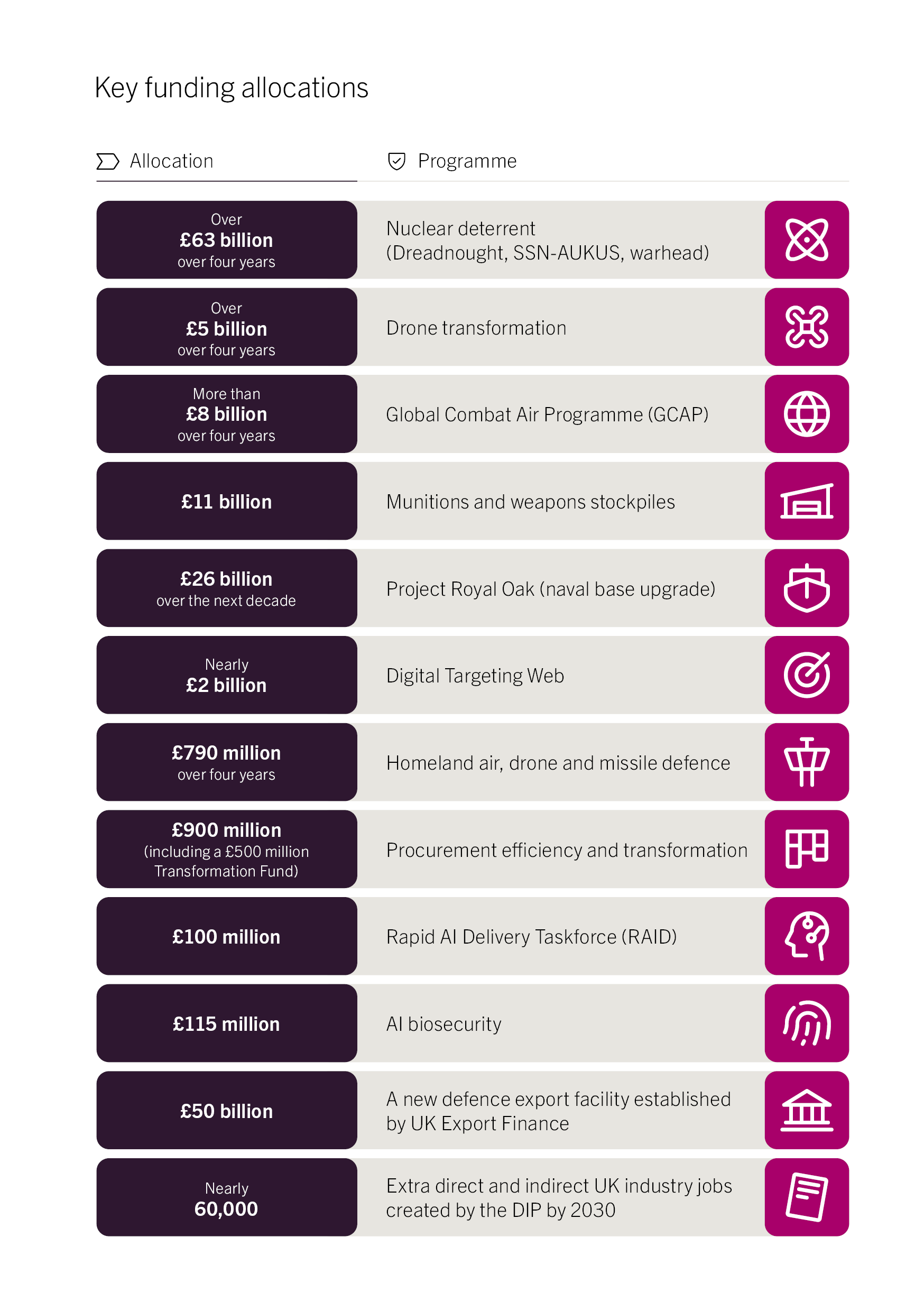
Source: The_Defence_Investment_Plan.pdf
Dated 1 July, more updates and analysis may follow.